Benign Prostatic Hyperplasia — Causes, Symptoms, Medical Management & Surgical Treatment Options
A weak stream. Straining to start. Waking up multiple times a night. Getting up immediately after sitting back down. These are the hallmark symptoms of an enlarged prostate — and they are highly treatable.
Benign Prostatic Hyperplasia (BPH) is the most common urologic condition in men over 50. The prostate grows slowly throughout life and, in many men, eventually squeezes the urethra enough to cause significant urinary obstruction. The good news: treatment options range from a simple daily pill to a minimally invasive outpatient procedure.
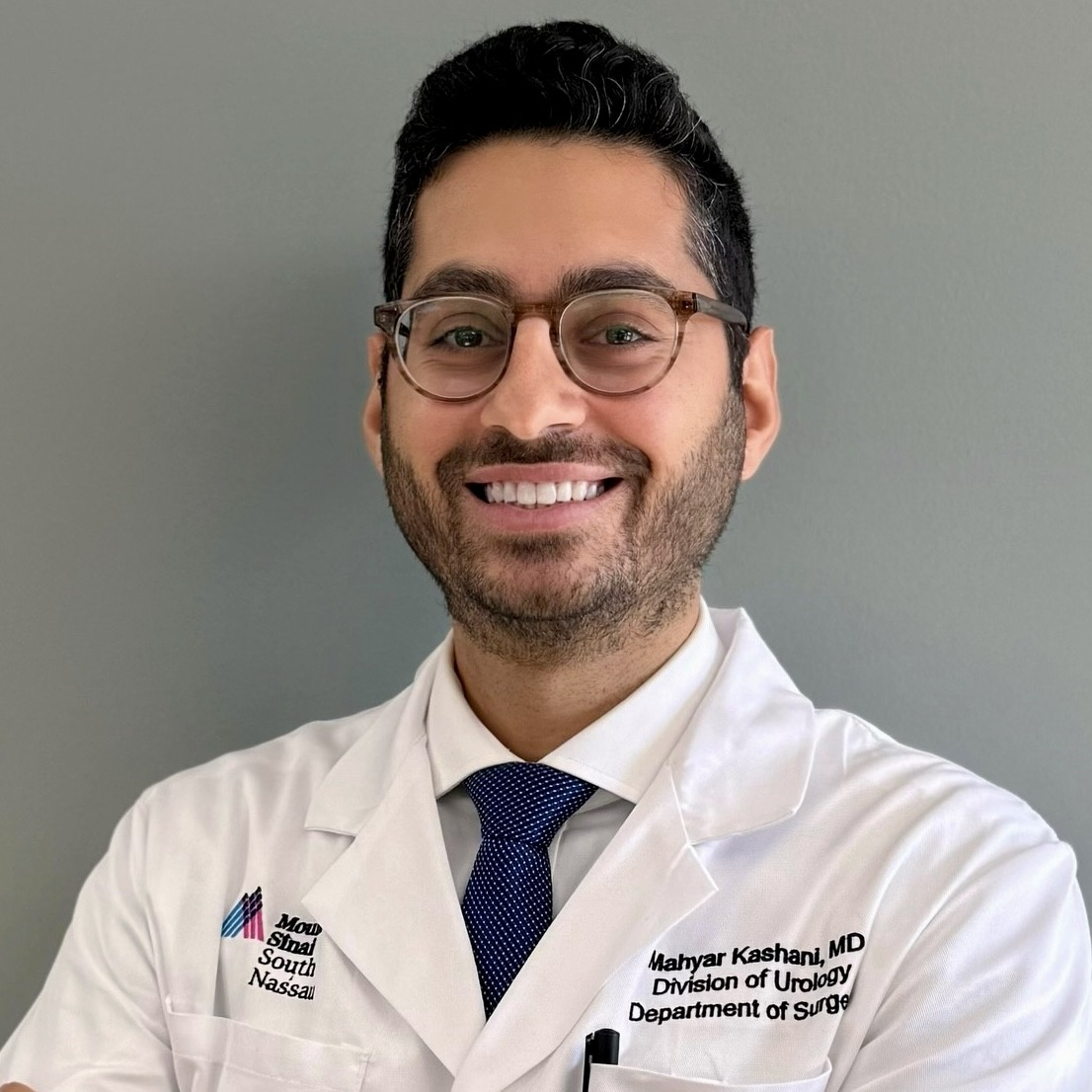
Dr. Kashani evaluates and treats BPH comprehensively — from your first visit and diagnostic workup through medication management, procedural treatment, and long-term follow-up.
Don't assume it's just aging: Urinary symptoms from BPH are not inevitable and do not have to be tolerated. Effective treatments exist at every severity level — from a once-daily pill to a hospital procedure that takes about an hour.
Benign Prostatic Hyperplasia is a non-cancerous enlargement of the prostate gland. The prostate surrounds the urethra — the tube that carries urine from the bladder. As the prostate grows, it compresses the urethra and creates a mechanical obstruction that restricts urine flow. BPH is not prostate cancer and does not increase your cancer risk, but both conditions can cause similar urinary symptoms — which is why proper evaluation is essential.
BPH primarily causes obstructive (voiding) symptoms, though irritative symptoms can develop secondary to the obstruction.
Urine flow that is weaker than it used to be, takes longer to start, or stops and starts. The classic sign of urethral obstruction from an enlarged prostate.
The feeling that the bladder never fully empties — often leading to returning to the bathroom shortly after urinating. A sign of significant obstruction or poor bladder contractility.
Waking up 2 or more times per night to urinate. One of the most disruptive BPH symptoms — significantly affecting sleep quality, energy, and daily function.
Continued dripping of urine after finishing urination. Caused by urine pooling in the urethra — common in BPH, frustrating, and often socially embarrassing.
Difficulty initiating urination — having to wait for urine flow to start, or needing to strain or push. Caused by increased resistance at the bladder outlet.
Urinating more than 8 times per day — often a secondary effect of incomplete emptying, as the bladder feels full again quickly after voiding.
Dr. Kashani uses a thorough evaluation to assess the severity of your symptoms and confirm BPH as the cause before recommending any treatment.
Important: BPH symptoms and prostate cancer can overlap. Before treating BPH, Dr. Kashani always ensures an appropriate PSA evaluation has been completed and documented.
From watchful waiting and lifestyle changes to daily medication
For mild to moderate BPH symptoms, medication is typically the first step. Several classes of drugs are available — and importantly, one of them (tadalafil) also treats erectile dysfunction at the same time.
Alpha blockers relax the smooth muscle in the prostate and bladder neck, improving urine flow almost immediately. They do not shrink the prostate but significantly reduce obstruction symptoms. Results are often noticeable within days.
Most commonly prescribed first. Flomax (tamsulosin) is the most widely used and well-tolerated option.
These medications work by blocking the hormone that drives prostate growth — actually shrinking the prostate over 3 to 6 months. They are most effective in men with larger prostates and also reduce long-term risk of acute urinary retention. They take longer to work than alpha blockers but provide more durable improvement.
Often combined with an alpha blocker for men with moderate-to-large prostates. Also reduces PSA — important to know when monitoring for prostate cancer.
Tadalafil — best known as Cialis for erectile dysfunction — is also FDA-approved for the treatment of BPH. It works by relaxing smooth muscle in both the prostate and bladder, improving urinary flow while simultaneously treating erectile dysfunction. For men dealing with both BPH and ED, daily low-dose tadalafil is an elegant, evidence-based solution that addresses both conditions at once.
If you have both urinary symptoms and erectile dysfunction — and many men do — this is often Dr. Kashani's first recommendation. One daily pill. Two major quality-of-life improvements.
For men with moderate-to-severe BPH symptoms and a large prostate, combining an alpha blocker with a 5-alpha reductase inhibitor produces better and more durable results than either drug alone. The alpha blocker provides immediate relief while the 5-ARI gradually shrinks the prostate over months.
Clinical trials show combination therapy significantly reduces the risk of symptom progression and the need for surgery compared to either drug alone.
When medication isn't enough — or when surgery is the better long-term answer
When medications don't provide enough relief — or when the prostate is large enough that surgery is the better long-term option — several excellent procedures are available. Dr. Kashani performs TURP and works closely with colleagues who offer Aquablation and UroLift.
TURP is the gold standard surgical treatment for BPH — the procedure by which all others are measured. A resectoscope is passed through the urethra and a wire loop removes excess prostate tissue, opening the urinary channel. No incisions. No general surgery. TURP has the most evidence behind it of any BPH procedure and produces the most durable long-term results.
Dr. Kashani performs TURP at the hospital. Most patients go home within 1 to 2 days with a temporary catheter for a few days. Long-term success rate exceeds 85%.
Aquablation uses a real-time ultrasound-guided robotic waterjet to precisely remove prostate tissue — without heat. This preserves the surrounding nerves and structures better than traditional resection, making it an excellent option for men who are particularly concerned about sexual side effects. Most effective for medium to large prostates.
Dr. Kashani will refer you to a trusted colleague who performs Aquablation when this is the best option for your situation.
UroLift is a minimally invasive office-based procedure that uses small implants to hold the enlarged prostate lobes apart — without cutting, heating, or removing any tissue. It has a very rapid recovery and preserves sexual function, including ejaculation. Best suited for men with smaller prostates who want to avoid surgery or general anesthesia.
Dr. Kashani will refer you to a trusted colleague who performs UroLift when it is the most appropriate choice for your anatomy and goals.
For men with mild symptoms that are not significantly affecting quality of life, watchful waiting with lifestyle modifications is a reasonable approach. This means regular monitoring without medication or procedures, combined with fluid management, caffeine and alcohol reduction, and bladder training techniques.
Not appropriate for men with urinary retention, kidney damage, or moderate-to-severe symptoms. Dr. Kashani will advise honestly whether this is a safe option for you.
No — BPH is completely separate from prostate cancer. BPH is a benign (non-cancerous) enlargement of the prostate. However, both conditions can cause similar urinary symptoms, and both can elevate PSA levels. This is why Dr. Kashani always ensures an appropriate PSA evaluation is performed as part of the workup for any man with urinary symptoms.
Yes — and this is one of the most useful pharmacological options in men's health. Daily low-dose tadalafil (5mg) is FDA-approved for both BPH and erectile dysfunction. Clinical trials show meaningful improvement in both IPSS urinary symptom scores and erectile function scores with a single daily pill. For men dealing with both conditions — which is very common — it is an excellent first-line option that Dr. Kashani frequently prescribes.
TURP removes prostate tissue, creating a permanent channel through the prostate. It is the most durable procedure with the longest track record. UroLift does not remove tissue — it holds the prostate lobes apart with implants, preserving ejaculation and requiring minimal recovery. Aquablation uses a waterjet to remove tissue with a nerve-sparing robotic approach. Each has advantages depending on prostate size, anatomy, patient age, and priorities. Dr. Kashani will help you understand which is right for you — and refer you to the appropriate specialist when needed.
TURP can cause retrograde ejaculation — where semen goes backward into the bladder instead of forward during orgasm. This results in a "dry" orgasm — the sensation is intact but there is no ejaculate. It occurs in the majority of TURP patients and is considered an expected outcome, not a complication. Erectile function is generally preserved. Dr. Kashani discusses this in detail before surgery so patients can make a fully informed decision.
Getting up once per night is considered within normal limits. Getting up 2 or more times — called nocturia — is a medical symptom worth addressing. Nocturia significantly disrupts sleep, increases fall risk in older men, and affects daytime energy and function. It is very common but not inevitable — and it is highly treatable with the right evaluation and management.
Medical management (office visits and prescription medications) is almost always covered. Surgical procedures like TURP are typically covered by insurance and Medicare when medically indicated. Dr. Kashani's team will verify your benefits and assist with any authorizations needed before treatment is initiated.
Yes — urinary symptoms in men can be caused by overactive bladder, urinary tract infection, bladder stones, urethral stricture, or less commonly prostate or bladder cancer. This is why a thorough evaluation is so important before starting any treatment. Many men have a combination of BPH and overactive bladder, which requires a different approach than treating either condition alone.
Dr. Kashani provides comprehensive BPH care — from your first office visit and diagnostic workup through medical management, procedural treatment, and long-term follow-up. He partners with trusted specialists for procedures like Aquablation and UroLift, ensuring you always get the right procedure from the right hands.
BPH is treatable at every stage — from mild inconvenience to significant disruption. Dr. Kashani offers same-week appointments at two Long Island locations.
Mount Sinai Doctors
2 Lincoln Avenue, Suite 102